

SEAOSD Newsletter April 2026 
President's Report
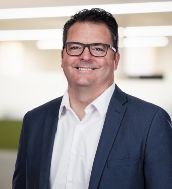
Composite Action – A Lesson for Engineering and Life
In structural engineering, composite action is a familiar and powerful concept. It describes the behavior of two or more distinct materials—often steel and concrete—working together as a single system. When properly connected, these materials share forces, complement one another’s strengths, and resist loads far more effectively than either could alone. The result is increased stiffness, greater strength, and improved performance. Simply put, the whole becomes greater than the sum of its parts.
This principle is foundational to what we do as engineers. A steel beam acting compositely with a concrete slab can carry more load with less deflection than the beam by itself. Shear studs, reinforcement, and detailing are what make that unity possible. Without intentional connection, the materials may exist side by side, but they will never truly act together.
That lesson extends well beyond our calculations and drawings.
Within our firms and project teams, composite action is not automatic—it must be deliberately cultivated. Architects, engineers, contractors, and owners all bring unique perspectives and strengths to the table. When these voices operate in isolation, inefficiencies and misunderstandings follow. But when communication is clear, trust is present, and goals are aligned; the team performs at a higher level. Projects move more smoothly, designs improve, and challenges are resolved more effectively.
The same is true within our profession as a whole. Organizations like SEAOSD exist to foster that composite action—bringing together individuals with diverse backgrounds, specialties, and experience under a shared purpose. Through collaboration, mentorship, advocacy, and knowledge-sharing, we elevate not only our technical standards but also our collective influence and impact. Standing together, our profession is more resilient and better equipped to adapt to changing demands, technologies, and responsibilities.
Composite action also reminds us that unity does not mean uniformity. In engineering, steel and concrete remain distinct materials, each contributing what it does best. Likewise, strong teams and organizations don’t diminish individual strengths—they rely on them. Differences in experience, perspective, and approach are not obstacles; they are essential components of a robust system when properly connected.
Perhaps most importantly, this principle applies outside the office as well. In our families, friendships, and communities, we function best when we act together. Support shared openly, responsibilities carried collectively, and challenges faced as a unit create resilience that none of us can achieve alone. Just as a composite section must have good connection to perform as intended, relationships thrive on communication, commitment, and mutual respect.
As engineers, we spend our careers designing systems that depend on connection, cooperation, and shared action. Composite action reminds us that strength rarely comes from going it alone. Whether in our firms, within SEAOSD, across the profession, or in our personal lives, we are strongest when we are united—intentionally connected and working together toward a common goal.
I invite you to not only seek opportunities for composite action in your designs, but to apply this principle intentionally within your firms, across our profession, and in your personal lives.
Jeremy T. Callister
SEAOSD President 2025-2026
Calendar of Events
Future Meetings
SEAOSD April 12, April 19 and April 26 Wise Golf Lessons
2:00 PM to 3:00 PM
Twin Oaks Golf Course
1425 North Twin Oaks Valley Road
San Marcos, CA 92069
SEAOSD Golf Tournament April 27, 2026
10:00 AM to 7:00 PM
Twin Oaks Golf Course
1425 North Twin Oaks Valley Road
San Marcos, CA 92069
SEAOSD SEE Awards Call for Entries
May 01, 2026 Deadline
8:00 AM to 5:00 PM
Online payment
SEAOSD SCL & YMF Mentorship Closeout Celebration: San Diego FC Game May 13, 2026
6:30 PM to 9:00 PM
Snapdragon Stadium
2101 Stadium Way
San Diego , CA 92108
SEAOSD Fellows and Trivia Night May 27, 2026
5:30 PM to 8:30 PM
Sterling Bay Property
9955 Pacific Heights Blvd
San Diego, CA 92121
SEE Awards June 25, 2026
5:30 PM to 10:00 PM
Scripps Seaside Forum
8606 Kennel Way
La Jolla, CA 92037


Job Ads
-
-
SEA News charges $100 ($150 for non-members) for “Job Posting” ads for 3 months in SEAOSD Newsletter.
-
In addition, the advertisement will be posted at www.seaosd.org under “Job Forum” for 3 months.
-
Please limit ads to 100 words.
-
Advertisements may be renewed or extended for $50 ($75 for non-members) per each additional month.
Classified Job Listing
-
Thank you Sponsors

Become a Sponsor Today! Click here for more information.
Thank you sponsors

se firm silver sponsor
 |
se firm BRONZE sponsor
 |
Gold sponsor
 |
 |
SIlver sponsor
 |
 |
 |
 |
 |
